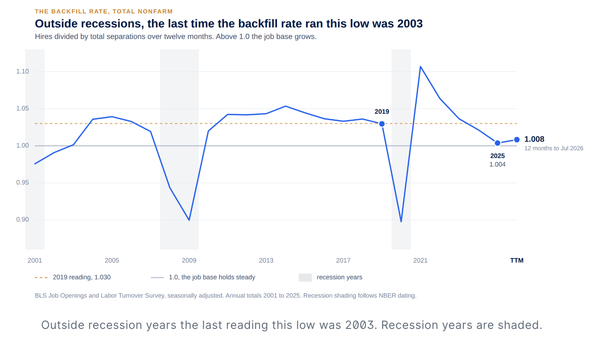
According to the U.S. Bureau of Labor Statistics, Job Openings and Labor Turnover Survey (JOLTS), February 2026 (released April 1, 2026), job openings fell to 6.9 million in February, below the psychologically important 7 million mark for the first time since late 2024. The quits rate held at 1.9 percent, its lowest sustained level since 2020. Hires declined to 4.8 million (a hires rate of 3.1 percent), while layoffs and discharges remained low at 1.7 million. Total separations were 5.0 million at a 3.1 percent rate.
Here's what's actually happening: The labor market is freezing in both directions simultaneously. Workers aren't quitting—a 1.9 percent quits rate means voluntary turnover has cratered, which sounds like good news for retention but actually signals that workers don't believe better options are available. At the same time, employers are pulling back on hiring: 6.9 million openings is still elevated historically, but the directional trend is down, and hires at 4.8 million means companies are posting jobs they aren't filling. The result is a labor market that looks stable on the surface but is quietly becoming more inert—workers staying put out of fear rather than loyalty, and employers posting without urgency.
Why it matters for you:
- Your retention numbers are flattering you right now: Low voluntary turnover is tempting to celebrate, but a quits rate at a five-year low means your team members may be staying because they feel stuck, not because they're satisfied. Engagement and intention-to-stay are different things. Run a quick temperature check—are your best people actively engaged, or just not actively looking? The distinction matters because frozen talent markets thaw fast when conditions shift, and the people who leave first when options return are the ones who were quietly unhappy longest.
- Open reqs are no longer the emergency signal they were in 2022: With hires declining even as openings stay elevated, the old playbook of "post it and they'll come" is no longer working. If you have open headcount, expect longer time-to-fill, more candidate drop-off mid-process, and more counteroffers from current employers. Budget your recruiting timelines accordingly and don't assume a posted role equals an imminent hire. Compress your interview process now—the candidates who are moving are still moving fast.
- This is the window to restructure comp and expectations: In a frozen labor market, you have more leverage than you've had in four years to have honest conversations about performance, role fit, and compensation structure without the immediate risk of losing people to a competitive offer. That window won't stay open indefinitely. If you've been deferring a tough performance conversation or a role-scope adjustment because you feared the person would leave, now is the time to have it.
Source: U.S. Bureau of Labor Statistics, Job Openings and Labor Turnover Survey (JOLTS), February 2026 (April 1, 2026)
Watch this: The gap between job openings (6.9M) and hires (4.8M) is running at roughly 2.1 million unfilled positions—a mismatch that has persisted for three years and shows no sign of closing. Watch whether this gap narrows through openings falling (employers pulling back) or hires rising (matching improving). The direction tells you whether the market is tightening or just stalling.
The contrarian play: A frozen labor market is the best environment to upgrade your team through strategic external hiring. The candidates available right now are not the desperate or underqualified pool that appears late in a downturn—they're solid performers who are open to conversations but not panicked. You're competing against employers who have slowed their hiring. Move deliberately and you can acquire talent at below-peak-market cost with less competition than you've seen since 2019.