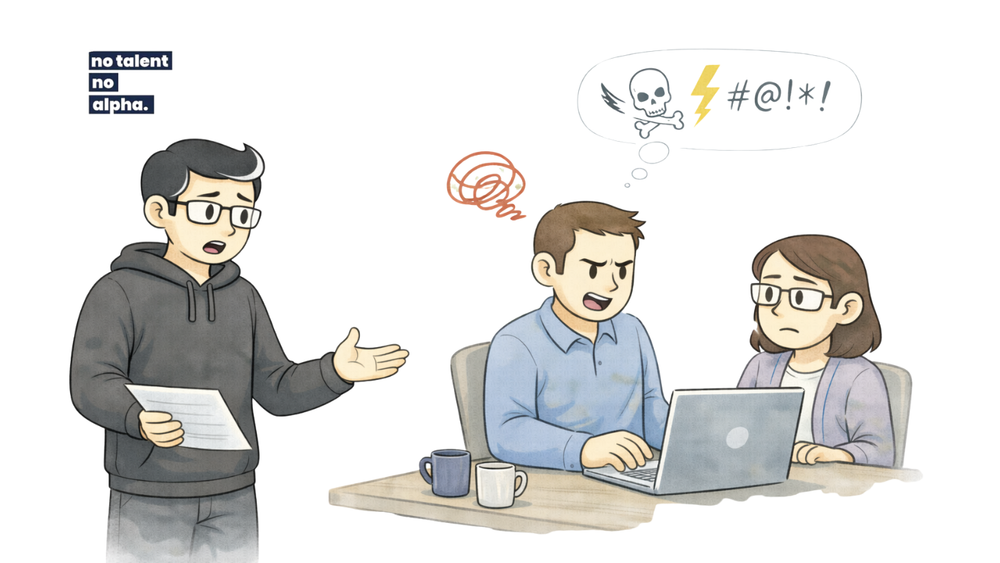
They're your best engineer. Your most capable analyst. The person who actually knows how the system works, who gets called in when things break, who leadership points to when they want an example of technical excellence.
They're also the reason two people on your team have quietly asked to transfer.
This is the hostage situation that doesn't get talked about enough. The technically brilliant employee who dismisses colleagues in meetings, hoards information, makes junior team members feel stupid for asking questions, or poisons the room with a steady drip of contempt. Their output is real. The damage they're doing is also real. And most managers freeze, because confronting them feels like risking the one person they can least afford to lose.
Here's the thing you need to hear first: a person who produces excellent individual output while degrading the people around them is not actually a high performer. They're a net negative with a misleading scorecard. Research from the University of Washington found that a single toxic team member can reduce overall team productivity by 30 to 40 percent. What your star is personally producing, your team is likely losing — quietly, invisibly, in the collaboration that never happens and the ideas that never get raised.
The math doesn't work in their favor as much as it looks like it does.
You have to have the conversation — directly.
The most common mistake managers make here is addressing the behavior sideways. Hints in one-on-ones. Vague comments about "team culture." A gentle suggestion that they might want to "be more collaborative." This doesn't work. It doesn't work because technically gifted people who operate this way have often been accommodated their entire careers. Indirect signals don't register. They've learned those signals mean nothing.
The conversation needs to be explicit: "Your technical work is strong. Your impact on this team is not. I'm going to describe specifically what I've observed, and I need this to change."
Specific is important. Not "you can come across as dismissive" but "in Tuesday's meeting you interrupted two people and told Jess her approach was naive in front of the whole group. That's not okay, and it's the third time I've seen something like this in the past month." Vague feedback lets them argue with the characterization. Specific incidents are harder to deflect.
Behavior is part of the job.
One thing that makes this conversation easier: reframe it as a performance issue, not a personality critique. How someone affects the people around them is part of their job. You're not asking them to be warmer or more pleasant. You're telling them that their current behavior is actively damaging team output, and that's a performance problem with consequences, the same way missing deliverables would be.
This matters because it shifts the conversation from "you're a difficult person" — which they'll resent and resist — to "here's what effective performance looks like in this role, and you're not meeting it in this area."
Then you hold the line.
After the conversation, you watch. Either the behavior changes, or it doesn't. If it does, acknowledge it. If it doesn't, the next conversation is about consequences — and you have to be willing to follow through.
This is where managers most often lose the thread. They have the first conversation, see no change, and quietly drop it because losing this person feels catastrophic. But consider what you're actually trading: you keep one technically brilliant individual and you lose the two or three good people who've run out of patience for being treated badly. That's usually the worse outcome.
The uncomfortable truth is that brilliant people who make teams worse are replaceable. The team culture you let them destroy is much harder to rebuild.
The problem isn't their talent. It's that you've let the talent become a shield.