Three Fifths Of The Information Sector's Job Losses Are Movies And Telecom
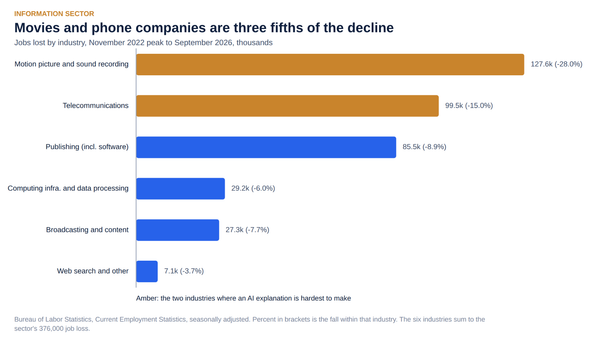
Information is the sector that uses AI most and is shedding jobs fastest. Break the decline into its six industries and movies and phone companies are three fifths of it.
Information is the sector that uses AI most and is shedding jobs fastest. Break the decline into its six industries and movies and phone companies are three fifths of it.
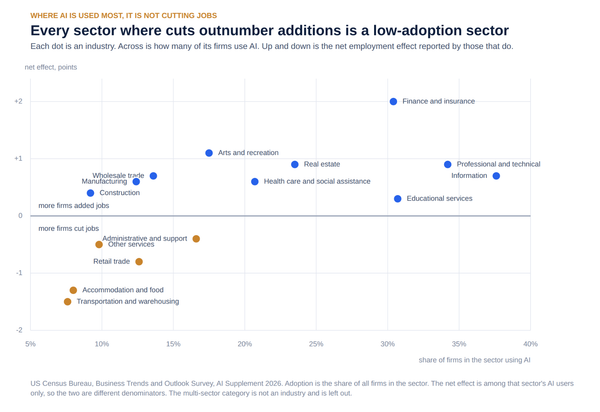
Among businesses that use AI, 95.7% say it changed their total employment not at all, and slightly more report headcount up than down. Adoption is accelerating anyway, which makes the number everyone quotes worth less than people think.
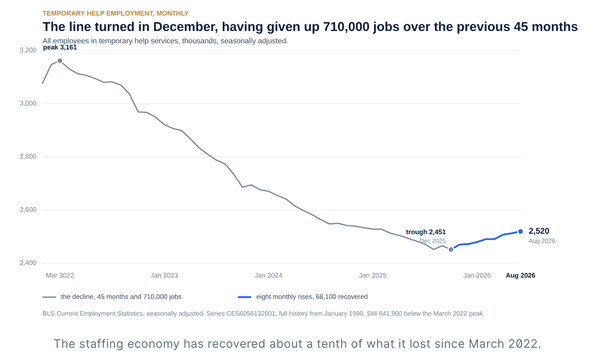
Temporary help employment turned up in December 2025, as it has sixteen times since 1990, and payroll growth followed, from losing 38,700 jobs a month to adding 71,300. The median past episode was running at 232,000.
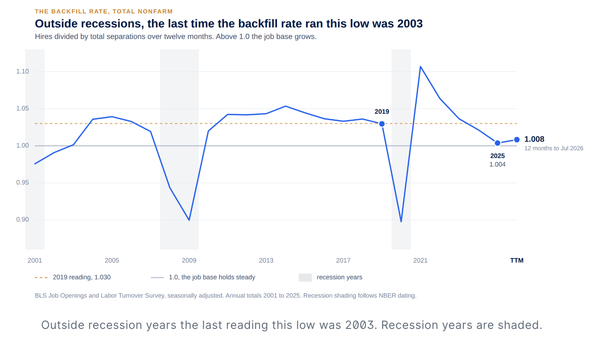
Employers hired 101 people last year for every 100 who left. In 2019 it was 103, and the difference is 1.3 million jobs that ended without anybody being laid off.
No employer in America had more of its workers walk out last year than the University of California. All of American manufacturing, combined, had 6,200.
About six in ten businesses have replied when the jobs report is published each month. More than nine in ten have by the final estimate, two months later. The jobs data did not get less reliable. The first draft of it did.
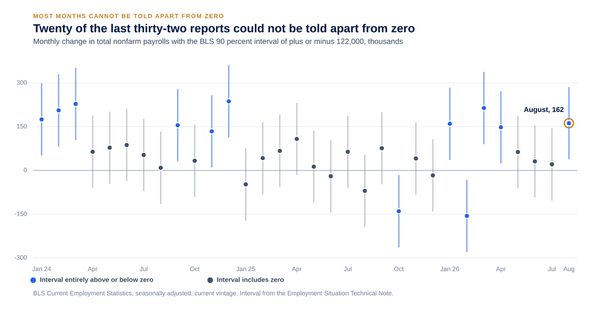
Payrolls rose 162,000 in August, more than five times the trailing average. BLS publishes a confidence interval of plus or minus 122,000 on that figure, and twelve recent reports have already slipped below the line it draws.
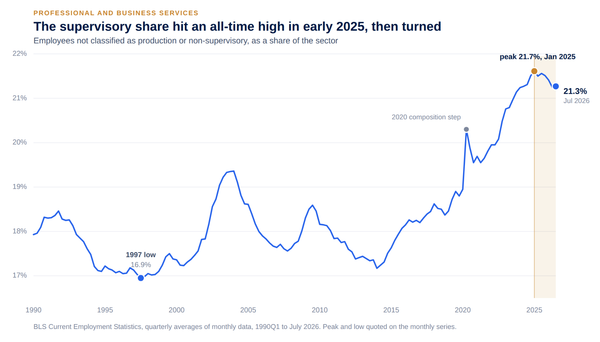
Uber's memo describes a flattening that has been running nationally since January 2025. Professional and business services now has 95,000 fewer supervisors and 133,000 more people who supervise nobody. On net the sector grew, which is exactly why no layoff count has registered any of it.
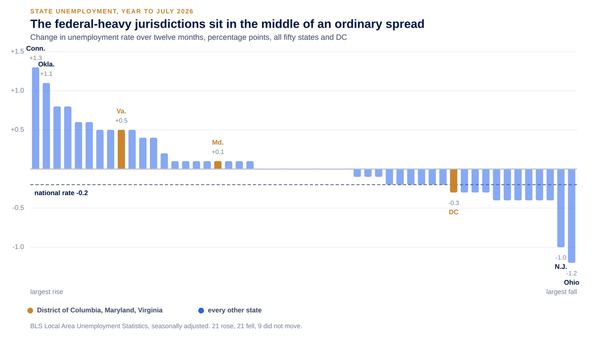
Federal employment fell by 252,000 over twelve months. Yet the loss does not appear in any state's unemployment rate, and the District of Columbia's actually fell. Why? Because a person who retires instead of looking for work is not counted as unemployed.
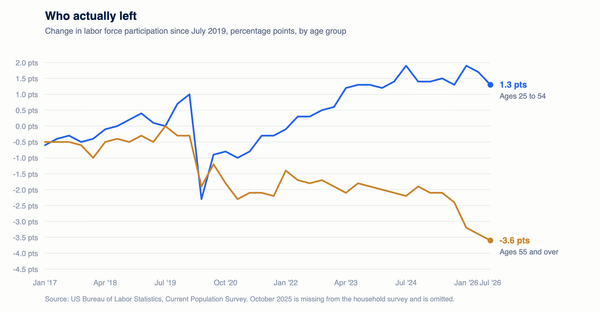
The US unemployment rate fell to 4.1% while the share of Americans with a job also fell. Both are true, and what explains them is not weakness. The entire decline in participation is people over 55.
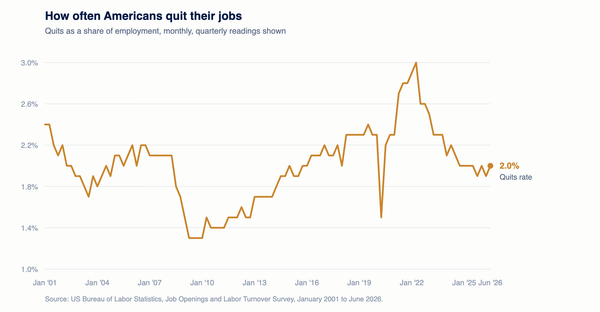
The quits rate has been between 1.9% and 2.2% for 31 straight months. Hiring is well below its 2019 pace and layoffs are too. A market where nobody is fired and nobody moves is not a strong one.
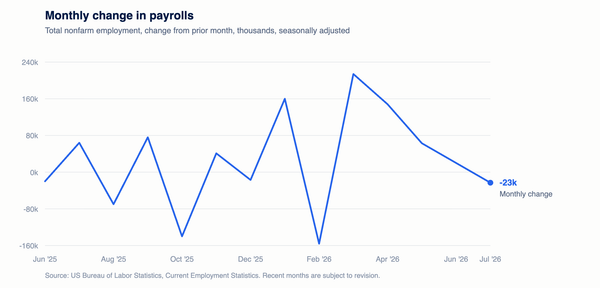
Payrolls fell 23,000. One sector supplied all of the past year of growth. Quits have not moved in 31 months. The monthly roundup of what the public data said in July, and what it says together.