Frameworks

Named patterns in how organizations hire, pay and manage.

32 pieces

The People-Heavy Penalty

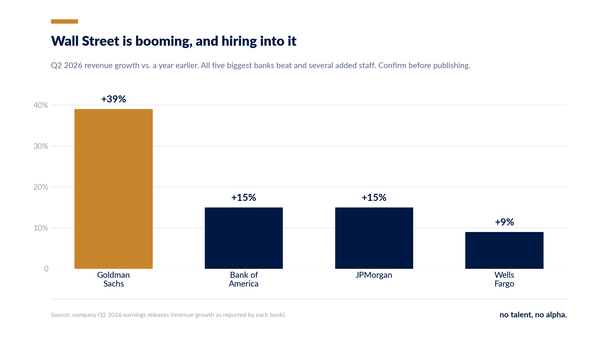
Microsoft cut 4,800 people and got called disciplined. JPMorgan added people, posted the biggest profit in US banking history, and got questioned about its costs. The market is sorting companies on a new factor, and it's getting it half wrong.
250 Years of Adding

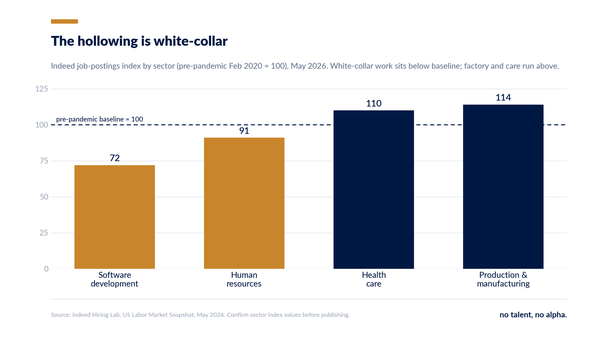
For 250 years America grew by adding. The 2026 playbook is to grow profits by subtracting, cutting labor now to harvest margin later, and the market may be paying for a one-time cut as if it compounds.

Strong Enough to Cut

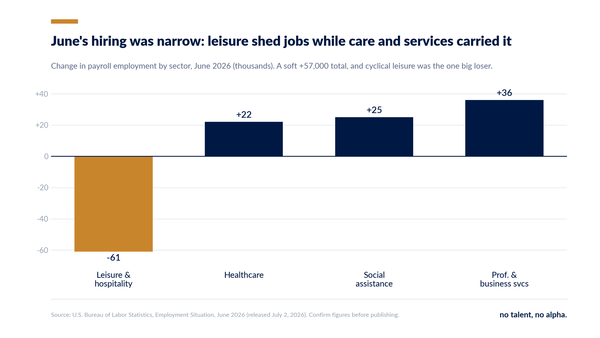
Low unemployment is doing two jobs at once: keeping the Fed hawkish, and giving companies cover to cut white-collar workers for margin. Both lean on the one number that breaks last.

The Peer Effect

Why the people around your team members are shaping their output as much as the people themselves — and most managers have never once managed it.

The Wrong Room Problem

Why your best people keep failing after promotion, and what it's actually costing you.

The Quiet Constraint

Why the most important person on your team isn't on your succession plan.

The Skip-Level Blind Spot

The information your managers filter out before it ever reaches you.

The Tenure Mix

The team that looks the most stable on paper is usually the one quietly losing the most output.

The Hiring Manager Variance Problem

Why the same candidate would get hired by some of your managers and rejected by others... and what that costs you

The Compensation Anchor

Why your offer letter predicts performance for years.

The Meeting Load Fallacy

Why cutting meetings rarely produces the productivity gains you're expecting and what's actually happening to the time you freed

The Visibility Trap

Why the work that drives results and the work that gets rewarded have been quietly diverging in your organization for years.