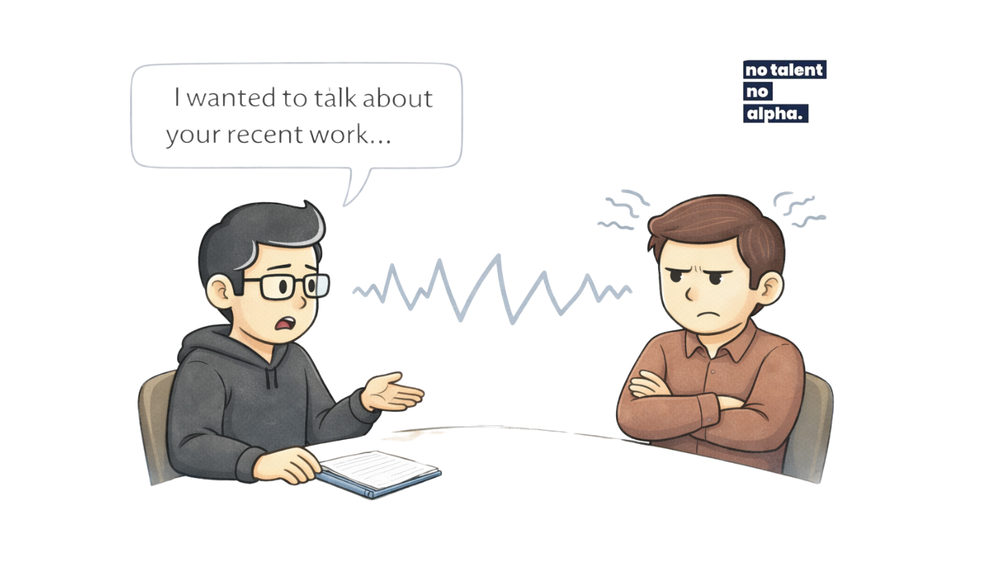
You're halfway through giving feedback when you see it happen. Their face goes blank. Arms cross. They say "okay" in a way that means absolutely nothing will change. Or worse, they start arguing every single point, turning your attempt to help into a debate you didn't want to have.
You leave the conversation feeling like you failed. They leave feeling attacked. Nothing gets better. And next time you need to give feedback, you find yourself rehearsing it for three days, trying to find the perfect words that won't trigger the shutdown.
Here's what's actually happening: defensiveness isn't about your feedback. It's about threat response. When someone feels criticized, their brain interprets it as danger. Some people fight (arguing, justifying, deflecting). Some people flee (shutting down, going quiet, checking out). Both are the same thing—a nervous system trying to protect itself from perceived attack.
Research from Google's Project Aristotle found that psychological safety (the ability to take risks without feeling embarrassed or punished) was the single most important factor in team performance. When feedback consistently triggers threat response, you don't just have a communication problem. You have a performance problem, because that person stops taking risks, stops learning, and starts managing their image instead of their work.
The good news: you can change this dynamic. Not by finding perfect words, but by changing what feedback means in the relationship.
Stop trying to make feedback comfortable.
Most managers, when they notice defensiveness, start hedging. They add more praise. They soften the message until it's barely there. They apologize for bringing it up. This makes everything worse, because now the person has to decode what you actually mean while also managing their emotional response.
Instead, make your feedback shorter and more direct. "In yesterday's client meeting, when you said we could deliver in two weeks without checking with the team first, it put us in a difficult position. Going forward, I need you to confirm timelines with me before committing to clients." That's it. No sandwich, no buildup, no apology for doing your job.
The defensiveness often comes from ambiguity. When feedback is vague or drawn out, the person's brain fills in the gaps with their worst fears. They assume you think they're incompetent, or that their job is at risk, or that you hate them. Clear, specific feedback gives them less room to catastrophize.
Name the shutdown when you see it.
If someone goes quiet or starts arguing, say what's happening. "I notice you've gone quiet. What's going on?" or "It seems like you're feeling defensive about this. Can we talk about that?"
This sounds risky. Won't it make things worse? Usually, no. Most people don't realize they're being defensive—they're just reacting. Naming it can interrupt the pattern and shift the conversation from content to process. Sometimes they'll tell you what you actually need to know: "I'm frustrated because this is the first I'm hearing about this" or "I thought I was doing what you asked."
But here's the critical part: you can't say this in an accusatory way. You're not calling them out for being difficult. You're genuinely curious about what's happening in the conversation. If you're annoyed when you ask, they'll hear it, and you'll confirm their fear that you're attacking them.
Build the foundation before you need it.
The time to address defensiveness is not during feedback. It's before. If someone consistently shuts down, you need a separate conversation about feedback itself.
Pick a time when you're not giving criticism. Say something like: "I've noticed that when I give you feedback, you tend to go quiet and seem frustrated. I want to understand what's happening so I can do this better. What makes feedback hard for you?"
Then listen. Really listen. You might learn that their last manager blindsided them with criticism in front of the team. Or that they grew up in a household where any mistake meant you were stupid. Or that they're so worried about losing their job that any feedback feels like a warning.
Once you understand what's driving the response, you can work with it. If someone needs time to process, tell them you'll send feedback in writing first, then discuss it the next day. If someone feels ambushed, schedule regular feedback check-ins so it's never a surprise. If someone needs to know they're valued, tell them explicitly: "You're good at your job. That's not in question. This is about getting from good to great."
Know when it's actually a performance problem.
Sometimes defensiveness isn't about communication style. It's about someone who fundamentally cannot accept feedback, and that's a job requirement issue.
If you've been clear, you've been kind, you've had the meta-conversation about feedback, and the person still can't hear you without shutting down or arguing—and their behavior hasn't changed after multiple conversations—that's not a feedback delivery problem. That's someone who's not meeting a basic job expectation.
Being able to receive feedback and adjust is part of professional competence. If someone can't do that despite your good-faith efforts to make it easier, you're not obligated to keep trying new approaches indefinitely. At some point, the conversation shifts from "How can I give you feedback better?" to "This role requires someone who can incorporate feedback, and that's not happening."
The real goal isn't making feedback feel good.
Your job isn't to make feedback painless. Your job is to make it useful. Some discomfort is inevitable when someone learns they need to change something. The goal is to make sure that discomfort is productive—focused on the work, not on defending their ego.
The managers who do this well aren't the ones with the best scripts. They're the ones who've built relationships where feedback is expected, frequent, and divorced from threats to someone's job security or self-worth. In those relationships, "Here's what needs to change" doesn't trigger shutdown because it's not interpreted as "You're failing."
If you're currently walking on eggshells around someone's defensiveness, start here: give the feedback anyway, notice what happens, and decide whether this is a pattern you can shift together or a fundamental mismatch between what the role needs and what this person can do.