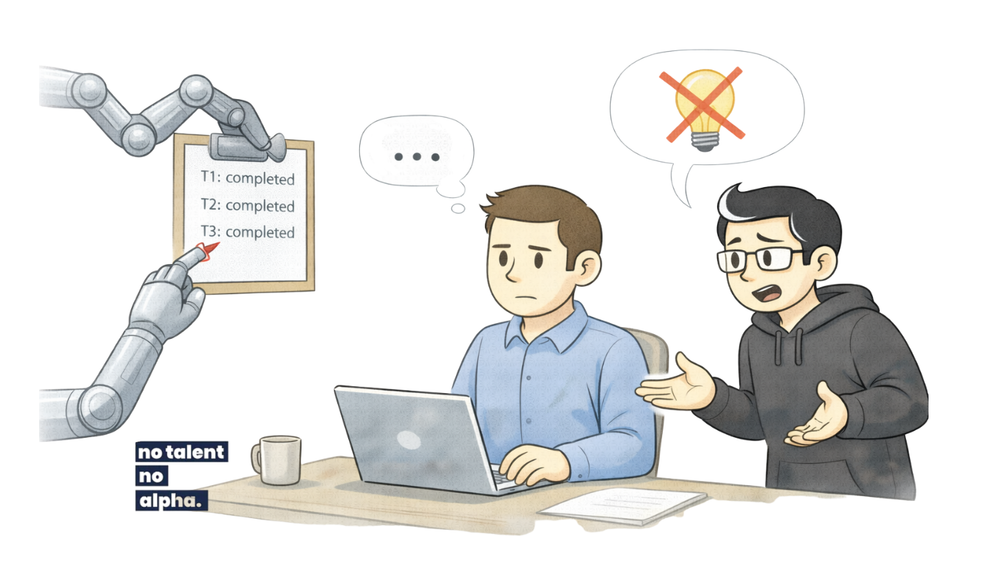
They complete every task you assign. They meet deadlines. They don't cause problems. And they are slowly driving you insane.
This is the employee who treats their job description like a legal contract, reading it for what they must do, never for what they could do. Ask them to do something, they'll do it. Don't ask, it won't happen. They're never wrong. They're never impressive. They're technically fine, and fine is eating your team alive.
This isn't quiet quitting in the dramatic TikTok sense. This is quieter than that. Gallup research has found that roughly half the U.S. workforce meets the bare minimum definition of "not engaged" — doing the required work but without the psychological investment that makes someone genuinely useful. These aren't people storming out the door. They're staying. They're just not really there.
The management instinct is to either tolerate it ("at least they're not causing problems") or address it the wrong way ("why aren't you showing more initiative?"). Neither works. Tolerance lets it spread — your engaged employees notice who's coasting and quietly recalibrate what's expected of everyone. And "show more initiative" is the world's least actionable feedback. You might as well say "be more motivated."
Here's the diagnostic question you need to answer first: is this about capability, direction, or investment?
Some employees do exactly what they're told because they genuinely don't know what else you want. The job was never defined beyond the task list, and they're doing their best with an incomplete map. These people respond immediately when you give them more clarity — a sense of what problems they're supposed to be solving, not just what tasks they're supposed to be completing. If your first instinct is "they should just know," that's a management gap, not a character flaw.
Other employees know exactly what you want and have decided it's not worth the effort. Something happened — they were passed over, burned by a previous employer, or concluded that extra effort produces nothing but more work. This person isn't unclear on expectations. They've made a deliberate calculation, and so far you've given them no reason to revise it.
The conversation for the first group is straightforward: reframe the role. Stop handing them tasks. Start telling them what outcomes they're responsible for. "You own customer response quality" is different from "respond to these tickets." Ownership creates space for initiative. Task lists don't.
The conversation for the second group is harder, and you have to have it directly. Not "I've noticed you could do more" — that's mealy-mouthed and invites nothing. The actual conversation is: "I want to talk about what you want from this role, because from where I sit, it looks like you're doing the minimum and stopping there. If something's made you feel like more isn't worth it, I'd rather know that than keep working around it."
Most managers won't have this conversation because it feels confrontational. It isn't. It's the only thing that gives the employee a real chance to change the situation, and it gives you information you actually need. Sometimes you'll learn something that changes how you see the problem. Sometimes you'll confirm that this person has checked out and isn't coming back.
Either way, you stop managing around the symptom.
One thing to be clear about: "does exactly what they're asked" is not a performance problem in isolation. You can't manage someone for failing to exceed expectations that were never set. What you can do is be explicit that the role requires judgment, not just execution — and then hold them to that expectation like any other.
If the behavior doesn't change after you've done both things — clarified the expectations and had the direct conversation — then you have a real performance issue, and you can address it as one. But most managers skip both steps and go straight to frustration. That frustration is fair. Expressing it to the employee without doing the work first isn't.
The inconvenient truth: if someone has been coasting for months and you've never called it out, you've been managing a standard you didn't intend to set.