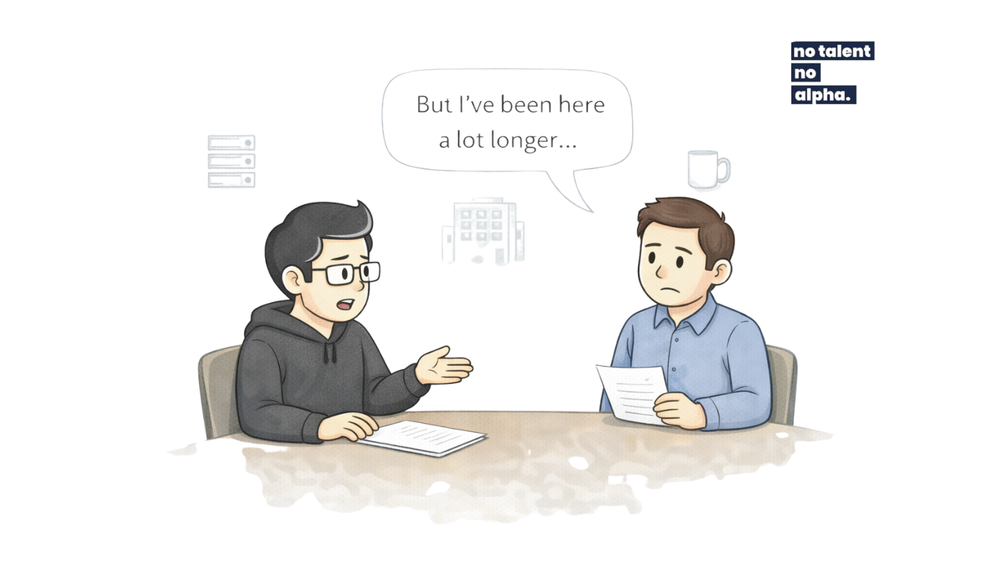
You got promoted. Or hired from outside. Either way, you now manage someone who's been at the company for eight years while you've been here for eight months. They know the systems, the history, the unwritten rules. You're still figuring out where the good coffee is.
The instinct is to earn their respect through deference. Ask for their input on everything. Emphasize how much you value their experience. Basically, apologize for existing. This doesn't work. It just signals that you don't think you should have the job.
Here's what's actually happening: Your authority doesn't come from tenure. It comes from the role. The company gave you this position because they need someone to make decisions, set direction, and own outcomes. Whether you've been here six weeks or six years is irrelevant to whether those decisions need to get made.
The median tenure for managers is 5.7 years, but plenty of effective managers are leading people with far more organizational experience. This isn't a bug in the system—it's how organizations work. Fresh perspective matters. Otherwise companies would only promote from within and never hire external leadership.
Stop trying to earn what you already have. You don't need permission to manage this person. You need to actually manage them. That means setting expectations, giving feedback, making decisions about their work, and holding them accountable to standards. All the things managers do.
The mistake is treating their tenure as a veto over your judgment. Yes, they know things you don't. That's useful. But "I've been here longer" isn't an argument for why a particular approach is right. If their idea is better, it should be better on the merits, not because they thought of it first.
Here's the framework: Separate institutional knowledge from decision-making authority. Their tenure gives them the first one. Your role gives you the second.
Use their experience without abdicating your role. When you're new, their knowledge is valuable. They know which vendors are reliable, which processes actually matter, which stakeholders have real influence. Tap into that. "You've worked with this client for years—what's worked well in the past?" is a good question.
But "What should we do?" is not. That's your job to decide. You can gather input, weigh their experience, consider their perspective. Then you make the call. If you consistently defer to them on decisions, you're not managing them—you're just the person who forwards their emails up the chain.
Address the dynamic directly if it's creating friction. Sometimes tenured employees resist new managers. Not overtly—just a lot of "we've tried that before" or "that's not how we do things here" or going around you to their old boss. When that happens, you can't ignore it and hope it gets better.
Have the conversation: "I know you've been here a lot longer than I have, and I value that experience. But I need us to be clear about how we work together. I'm going to make decisions you might not agree with. When that happens, I need you to either bring your concerns to me directly, or support the direction once it's set. What I can't have is you undermining decisions with the team."
This isn't confrontational. It's clarity. Most people respond well to directness about roles and expectations. The ones who don't were going to be problems regardless of your tenure.
Don't confuse respect with submission. You can absolutely respect someone's experience and knowledge while still expecting them to follow your direction. Respect means listening to their input, acknowledging their expertise, and treating them like a professional. It doesn't mean letting them run the show.
If they're genuinely better suited to make certain decisions—maybe they own a technical domain you don't understand—then delegate that authority explicitly. "I trust your judgment on the build process. Make the call and let me know what you decided." That's empowerment, not weakness.
Watch for the tenure trap on your team. This dynamic doesn't just affect you and them—it affects how the rest of your team sees authority. If your longest-tenured employee operates like they're really in charge, everyone notices. Junior team members start going to them instead of you. People wait to see what they think before committing to your decisions.
You fix this by demonstrating that tenure doesn't override role. When the long-tenured person disagrees with you in a meeting, thank them for the input, explain your thinking, and move forward with your decision. When someone asks "What does [senior person] think?" respond with "I'll make sure to get their input, but here's the direction we're taking."
If they're genuinely struggling with the dynamic, help them see it differently. Some people with long tenure feel threatened by new managers. They've seen managers come and go. They might have wanted the role themselves. That's real.
You can acknowledge it: "I know you've been here a long time and you've probably seen a lot of managers in this seat. I'm not trying to ignore everything that came before me. But I do need to be able to lead, and that means sometimes doing things differently than you're used to. I think we can make this work if we're both clear on roles."
Most people just want to know they still matter. If you can show them that their expertise has a place without it having veto power, the dynamic usually settles.
The bottom line: Managing someone with more tenure than you requires neither apology nor dominance. It requires doing the job you were hired to do—making decisions, setting direction, and holding people accountable—while being smart enough to leverage what they know that you don't.