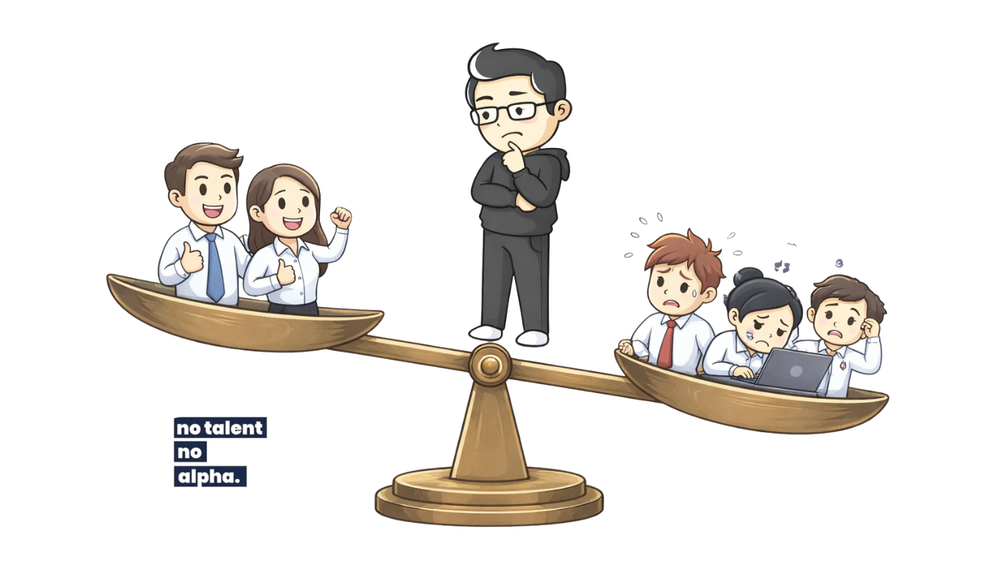
Here's why: Your top 20% of performers typically generate 50-80% of your team's output. Your bottom 20% generate maybe 10-15%. When you invest time in a top performer (better projects, stretch assignments, coaching on the next level) you're amplifying already-high productivity. A 10% improvement in a top performer's output might equal a 30% improvement in a struggling one, but it's far more likely to happen.
The economic case gets clearer when you factor in retention. Top performers leave when they're neglected. Every hour you spend trying to save a mediocre employee who might improve 15% is an hour you're not investing in keeping your best person from updating their LinkedIn profile. The replacement cost of a top performer (12-18 months of salary, plus institutional knowledge loss) dwarfs the cost of replacing someone who's barely meeting expectations.
So what's the right split? Roughly 50% of your 1-on-1 time should go to your top 20%. Another 30% to your middle 60%; these are the team members who could become top performers with the right development. The remaining 20% goes to your bottom performers, but with a clear decision framework: Are they coachable and motivated but lacking skill? Invest briefly. Are they skilled but unmotivated? That's a culture fit problem; exit fast. Are they neither? You're managing them out, not up.
The principle: Amplify strength, don't subsidize weakness. Your job isn't to make everyone average. It's to make your best people better and ensure your worst people either improve quickly or leave. The middle will take care of itself when they see what success looks like.
Time is your scarcest resource as a manager. Spend it where the return compounds.