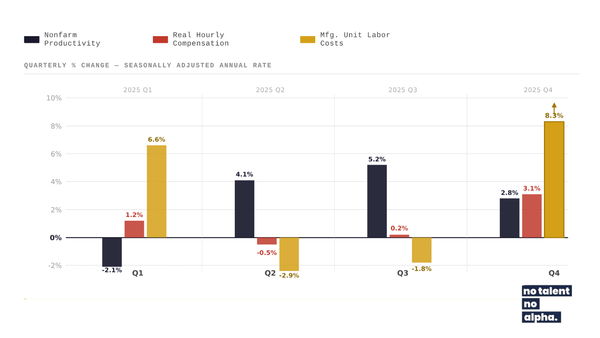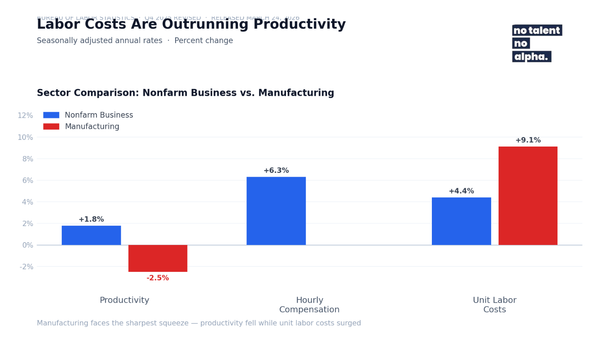
Unit Labor Costs Jumped 4.4% in Q4
Wage growth is outpacing productivity and the revised BLS data shows the margin squeeze is worse than first thought.
Series
Single figures from the labor data, taken apart.
62 pieces
Wage growth is outpacing productivity and the revised BLS data shows the margin squeeze is worse than first thought.
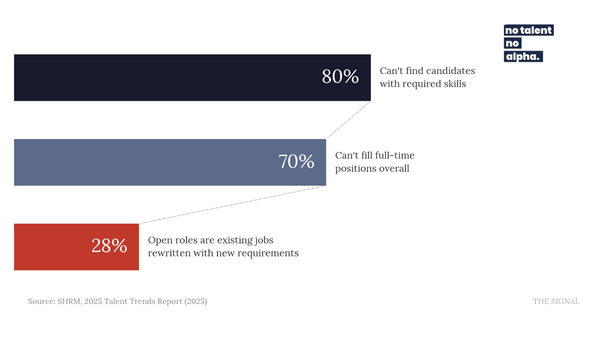
The skills gap isn't a pipeline problem. It's a speed problem, and your internal talent strategy is falling further behind every quarter.
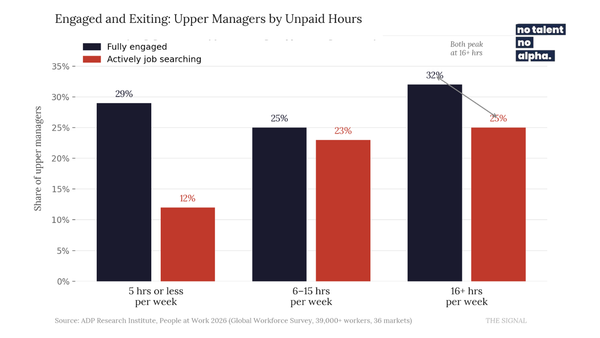
High engagement and high turnover intent are living in the same employee. Unpaid hours explain why.
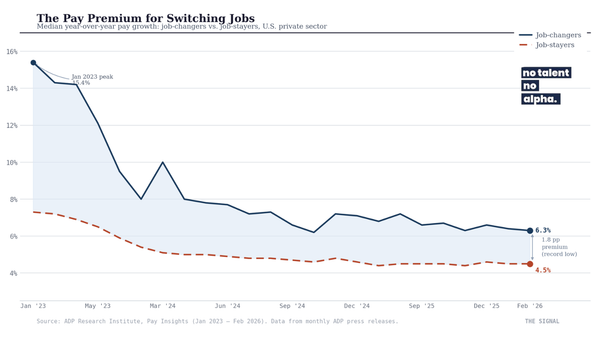
Changing employers used to guarantee a raise. In 2026, it barely does. The lever workers relied on for three years is nearly gone.
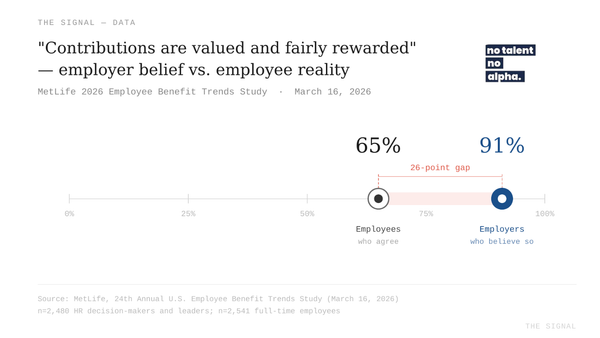
There's a 26-point gap between what managers believe about recognition and what employees actually experience. AI is making it wider.
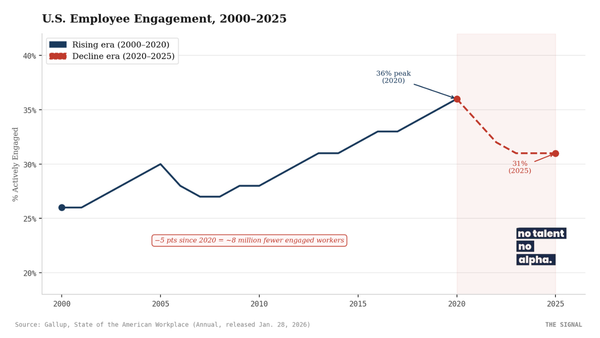
U.S. engagement has been flat for two years, but the five-year slide tells a different story. And it's not coming from where most organizations are looking.
The economy got more efficient last year. The gains didn't distribute evenly, and manufacturing is running in the opposite direction entirely.
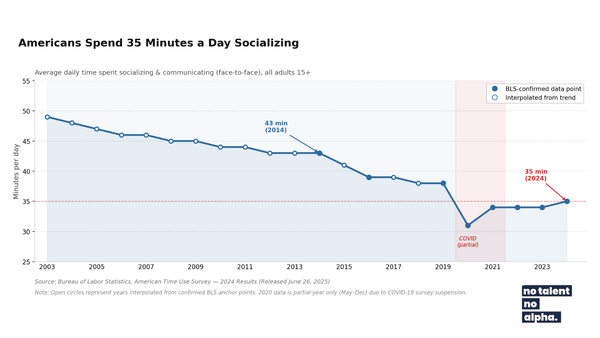
Down from 43 minutes a decade ago, and your workforce brought that deficit to work with them.
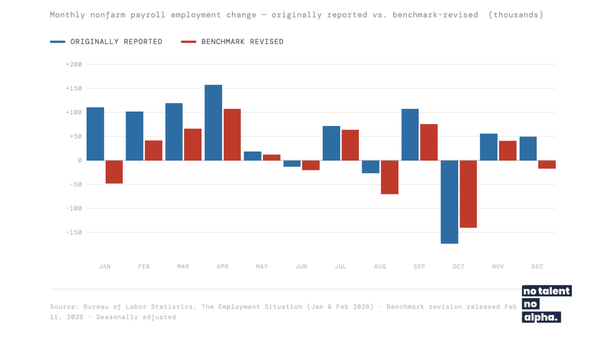
The labor market was 403,000 jobs weaker in 2025 than what was reported.
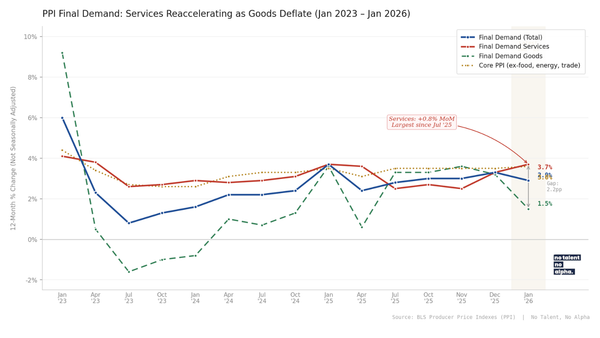
Goods prices are falling. Services prices just posted their biggest monthly jump since July 2025. For managers in labor-intensive industries, the inflation story isn't over.
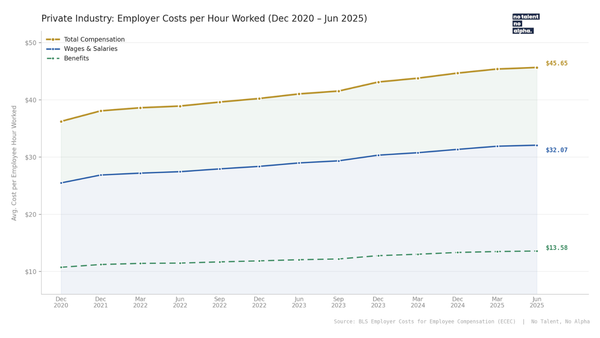
For every dollar an employer spends on a private-sector worker, 30 cents never appears in a paycheck. That gap is growing.
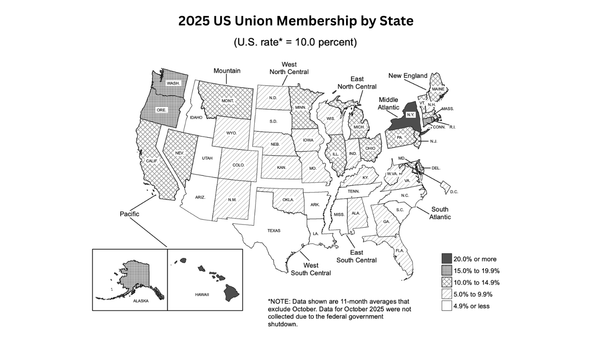
Private-sector unionization is at historic lows. The wage premium it commands is not.