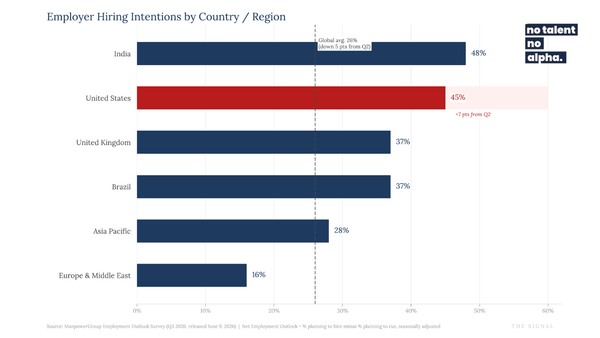
U.S. Hiring Intentions Rose 7 Points as the Rest of the World Retreated
Employer confidence strengthened to a cycle high in the U.S. even as hiring outlooks weakened in 33 of 42 countries. The divergence matters more than the headline number.
Series
Single figures from the labor data, taken apart.
57 pieces
Employer confidence strengthened to a cycle high in the U.S. even as hiring outlooks weakened in 33 of 42 countries. The divergence matters more than the headline number.
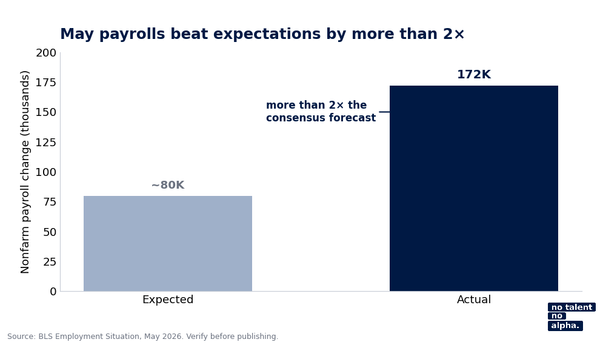
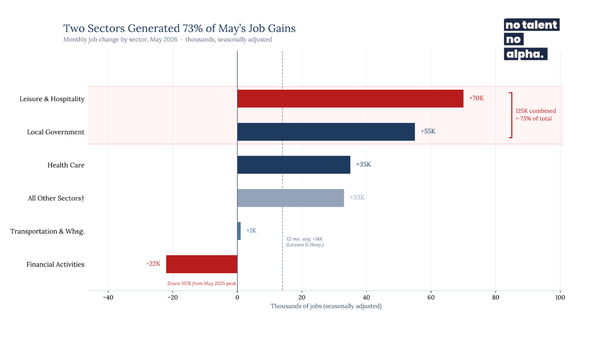
Leisure, hospitality, and local government added 125,000 of May's 172,000 jobs. The sectors most managers compete in added almost nothing.
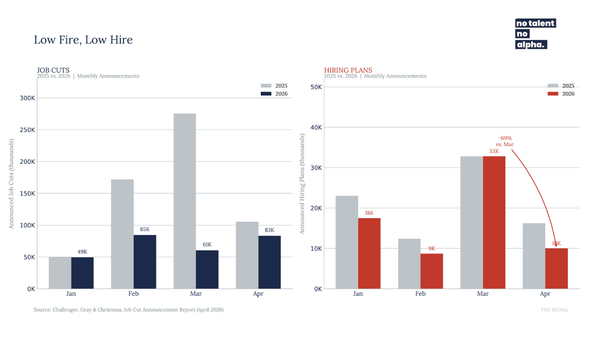
U.S. employers announced fewer layoffs in April than a year ago. They also announced far fewer hires. The second number matters more.
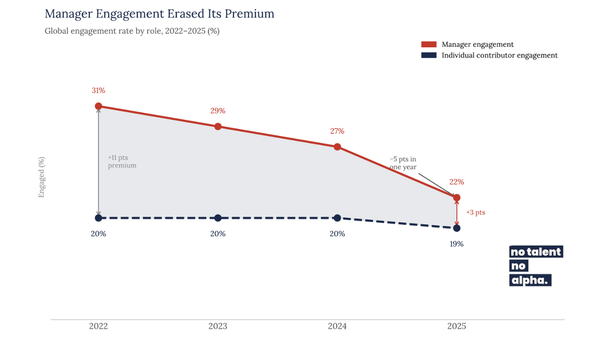
The layer of your organization that drives 70% of team engagement variance is now barely more engaged than the people it manages.
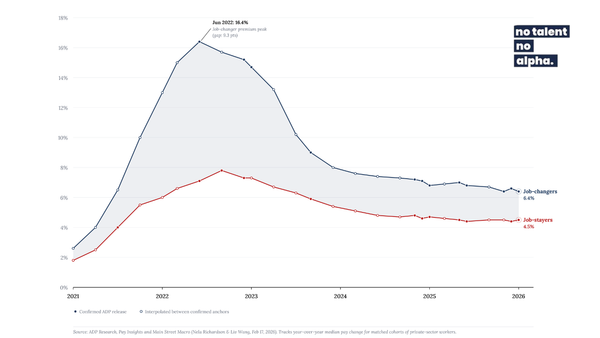
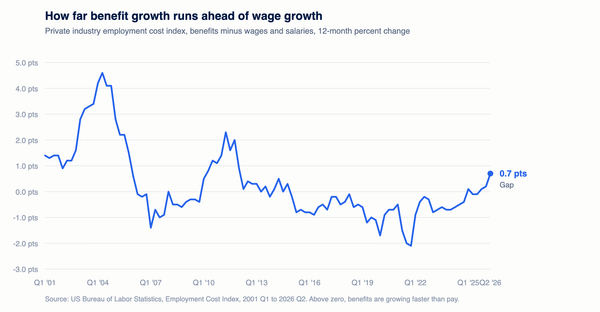
The gap between switcher and stayer pay shrank to 1.9 percentage points at the start of the year — the smallest since 2020. But new-hire pay just thawed for the first time in 18 months.
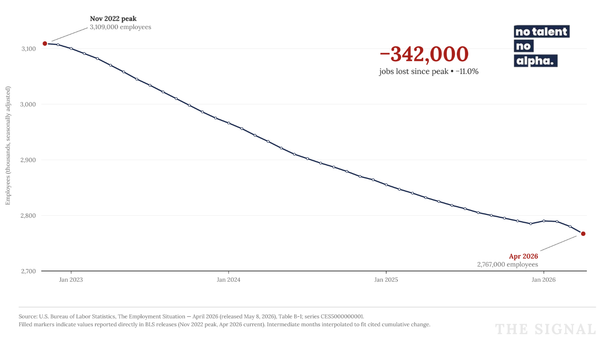
Tech, telecom, and media employment is down 11.0% from its peak — and it kept dropping in April. The talent pool you're hiring from is bigger than your salary bands assume.
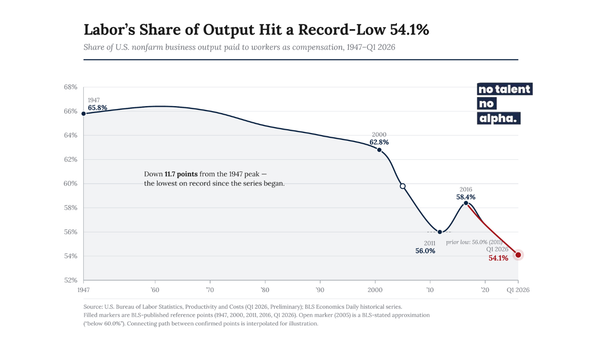
Labor's share of nonfarm output fell to a record-low 54.1% as AI-driven productivity gains flowed to capital. What it signals for hiring, retention, and comp budgets.
The headline says the labor market is stabilizing. The one hard employer signal inside the index says the opposite.
The headline unemployment rate barely moved. Almost all the damage was absorbed by workers trying to enter the labor force for the first time.
Healthcare added 618,000 jobs over the past 12 months. Every other sector combined lost ground.
The national 4.4% rate looks stable. Underneath, state-level deterioration is outpacing improvement seven to one.
Employers cited AI for one in four announced cuts last month, up from one in twenty for all of 2025. The narrative shift is happening in real time.