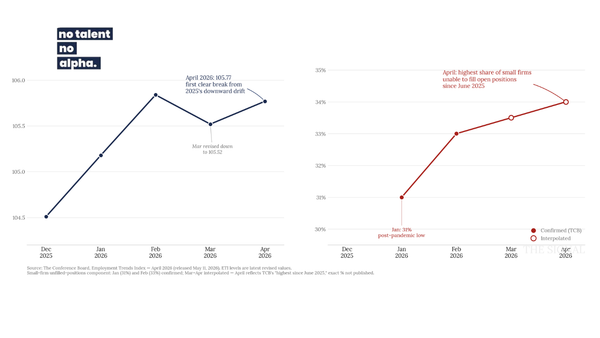
The Employment Trends Index Rose on Seven of Eight Components
The headline says the labor market is stabilizing. The one hard employer signal inside the index says the opposite.
Series
Single figures from the labor data, taken apart.
62 pieces
The headline says the labor market is stabilizing. The one hard employer signal inside the index says the opposite.
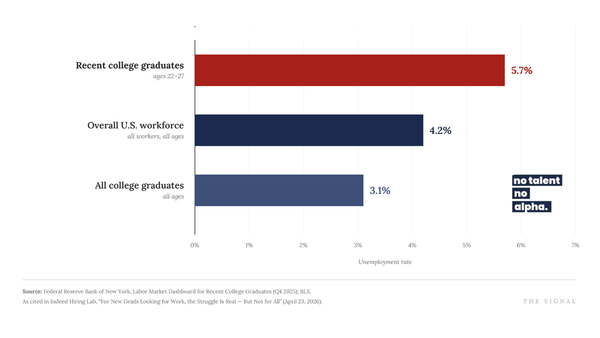
The headline unemployment rate barely moved. Almost all the damage was absorbed by workers trying to enter the labor force for the first time.
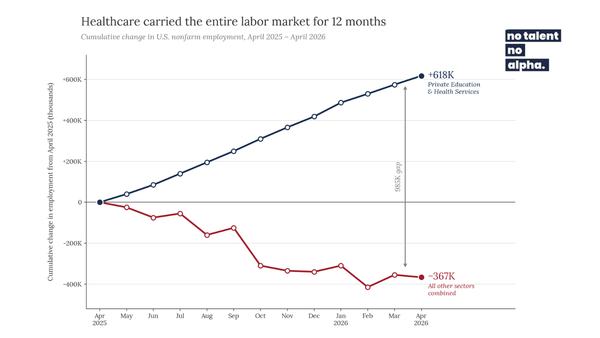
Healthcare added 618,000 jobs over the past 12 months. Every other sector combined lost ground.
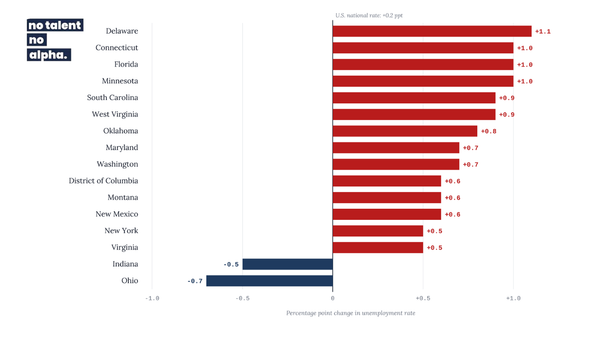
The national 4.4% rate looks stable. Underneath, state-level deterioration is outpacing improvement seven to one.
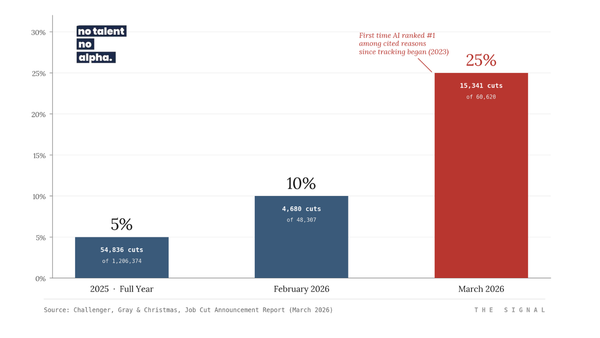
Employers cited AI for one in four announced cuts last month, up from one in twenty for all of 2025. The narrative shift is happening in real time.
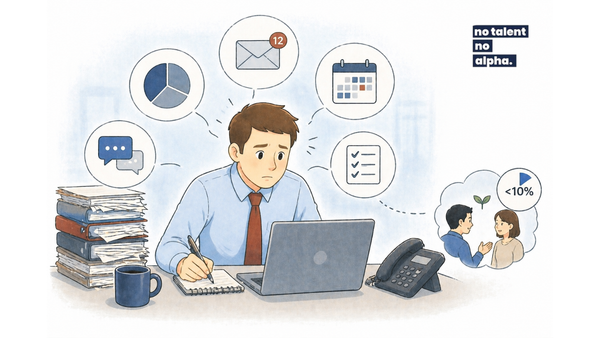
Gallup, Microsoft, and Gartner all point to the same problem: managers are buried in meetings and admin. The people they’re supposed to develop are paying for it.
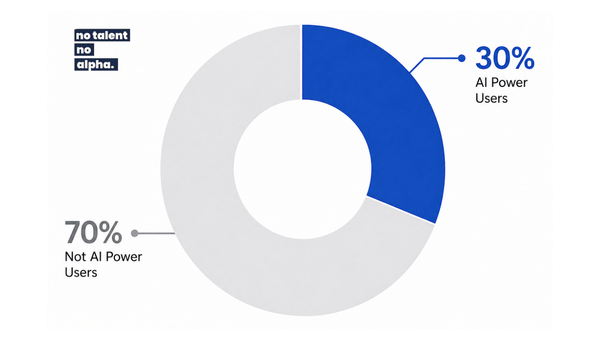
The conventional worry about AI and workplace isolation has the causality exactly backward.
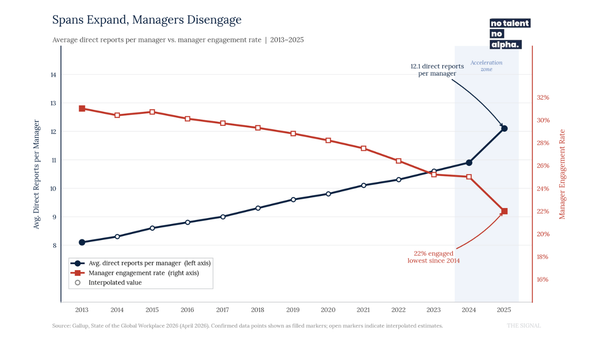
The average manager now oversees 12.1 people, up 11% in a single year. The de-layering math has inverted, and most orgs haven't noticed yet.
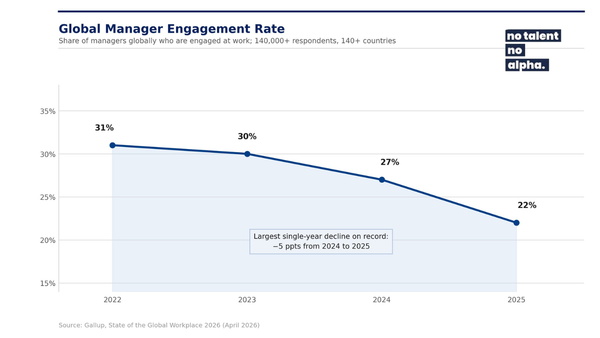
Global manager engagement fell five points in a single year.
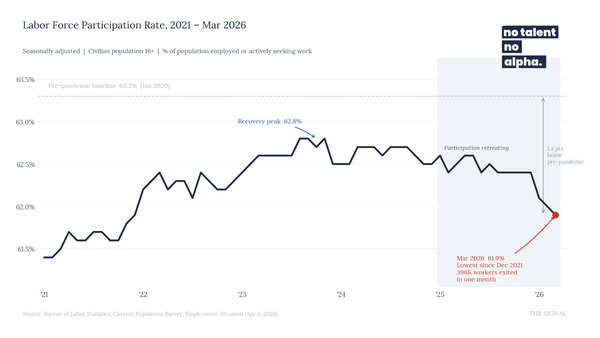
Payrolls look fine. But the pool of available workers is quietly contracting — and the sectors still growing are not the ones most managers hire from.
SHRM named workforce fragmentation its top HR trend for 2026. Most managers are running mixed teams with full-time assumptions. That gap is getting expensive.
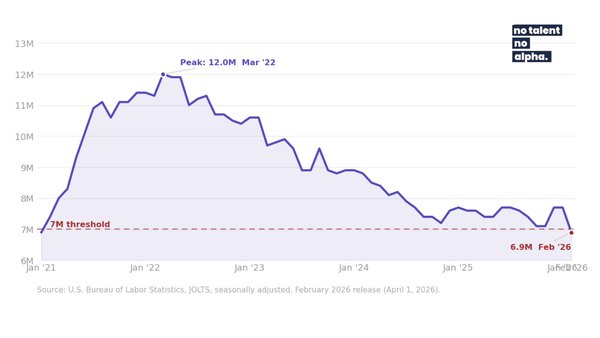
The labor market is freezing in both directions. Workers aren't quitting; employers aren't hiring. That combination is more complicated than it looks.